

Not every fever needs the ER.
Is every fever a reason to rush to the hospital?
Urgent care is the sensible middle ground for many fevers.
But knowing when to go can save time and catch serious problems early.
This post gives clear temperature cutoffs by age, lists the red flags that mean get evaluated now, offers safe home steps, and explains when urgent care, not the emergency room, is the right place.
Read on so you know what to watch and what to do next.
Key Fever Thresholds and Warning Signs Requiring Urgent Care
Fever thresholds aren’t the same for everyone. Infants under three months need immediate evaluation if their temperature hits 100.4°F (38°C) or higher. Their immune systems can’t handle serious bacterial infections like meningitis or sepsis the way older kids or adults can. Things can go downhill fast in this age group. For babies between three months and two years, you’re looking at 102°F (38.9°C) as your concern point, especially if the fever sticks around for more than a day. Older kids and adults? 103°F (39.4°C) is where things get serious, particularly when fever reducers don’t bring it down or when it’s been hanging on for two or three days without getting better.
But the number on the thermometer isn’t everything. A moderate fever sitting around 100.5°F to 102°F that won’t quit after three or four days should get checked out, even if it doesn’t look scary on paper. Low grade fevers between 100.0°F and 100.4°F that last a week or more can point to chronic infections or inflammatory stuff that needs actual diagnosis. Pay attention to patterns too. A fever that vanishes for a day then comes roaring back, or one that spikes every evening, might mean there’s an infection that needs targeted treatment instead of just managing symptoms at home.
Some symptoms turn any fever into a get help now situation. If you’re seeing any of these alongside an elevated temperature, don’t wait:
Stiff neck or severe headache. Could be meningitis or a serious infection affecting your central nervous system.
Confusion, disorientation, or altered mental status. Sign of dehydration, sepsis, or something affecting the brain.
Seizure activity. Especially concerning in young children or adults who don’t have a seizure history.
Difficulty breathing, chest pain, or rapid breathing. Might indicate pneumonia or severe respiratory infection.
New rash, especially if it doesn’t blanch when you press on it. Can signal serious bacterial infections or blood related complications.
Signs of severe dehydration. Dry mouth, dark or absent urine, dizziness, feeling really out of it, sunken eyes in kids.
These symptoms shift things from “keep an eye on it” to “get evaluated now.” Even if the fever itself is moderate, any red flag means your body’s struggling in ways that need professional eyes.
Distinguishing Urgent Care From the Emergency Room for Fever Cases
Urgent care handles fevers that cross concerning thresholds but aren’t actively life threatening. Your temperature’s high, it’s been going on for days, or you’ve got moderate pain, nausea, mild dehydration going on? Urgent care gives you rapid assessment, testing, and treatment without the wait and cost of an emergency room. You’ll get a thorough evaluation, labs or imaging if it’s needed, and a clear plan. Could be antibiotics for a confirmed bacterial infection, IV fluids to get you rehydrated, or solid guidance on managing symptoms safely at home. It’s the bridge when your regular doctor isn’t available and things feel too serious to ignore but not dire enough for calling 911.
The ER becomes necessary when fever comes with symptoms suggesting immediate danger to vital organs. Altered mental status (confusion, difficulty waking, not responding) requires emergency evaluation because it might signal sepsis, meningitis, or severe dehydration affecting brain function. Severe breathing difficulty, bluish or gray skin tone, uncontrolled vomiting that prevents keeping any fluids down, or a seizure lasting more than a few minutes all demand ER level care. If you’re not sure whether chest tightness is “uncomfortable” or “I genuinely can’t catch my breath,” go with the ER. Urgent care providers can stabilize plenty of conditions, but they’ve got limits on monitoring and intervention for patients who are deteriorating quickly.
Common conditions that send people to urgent care include strep throat with fever, urinary tract infections, mild pneumonia in otherwise healthy adults, flu or COVID with moderate symptoms, ear infections in kids who are alert and drinking. Conditions that route to the ER include suspected meningitis, severe sepsis, diabetic complications with high fever, febrile seizures that don’t stop quickly, and fever in newborns. When you’re not sure, call the urgent care center. They can help you decide over the phone whether to come in or head straight to the hospital.
Expected Evaluation and Tests During an Urgent Care Visit
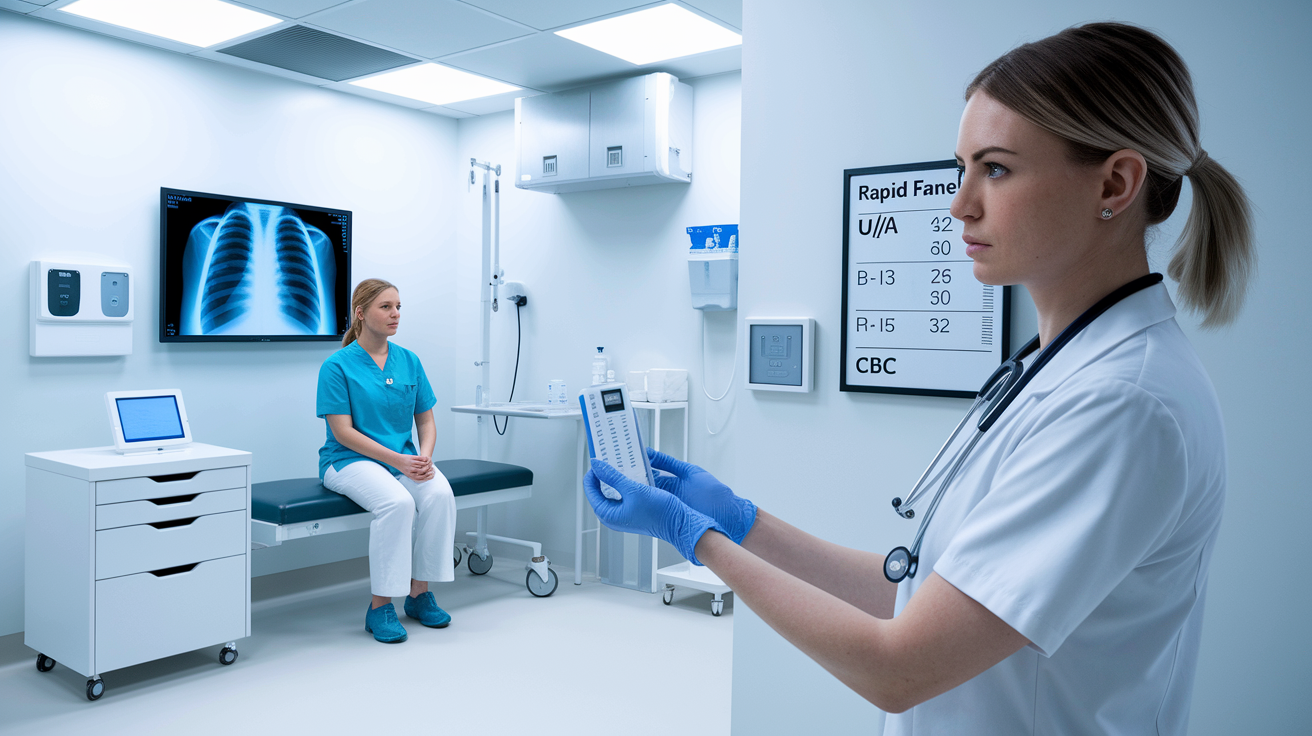
When you show up at urgent care with a fever, the team starts with a full set of vitals. Temperature, heart rate, blood pressure, respiratory rate, oxygen saturation. This baseline helps determine how your body’s responding to whatever infection or inflammation is causing the fever. The provider will ask about when symptoms started, how long they’ve been going on, any recent travel, known exposures to illness, and your medical history (especially chronic conditions or medications affecting immune function). Then comes the physical exam, focusing on areas that commonly cause fever: throat, ears, lungs, abdomen, skin, lymph nodes. This hands on assessment often points toward the likely source before any lab work begins.
Tests get chosen based on your symptoms and what the exam turns up. Rapid tests for influenza, COVID, and strep throat deliver results in minutes and guide immediate treatment decisions. Urinalysis checks for urinary tract infections, one of the most common bacterial causes of fever in adults. Blood work might include a complete blood count to assess infection severity and inflammation markers. If you’re short of breath or the provider hears abnormal lung sounds, a chest X ray can confirm or rule out pneumonia. These tools let the urgent care team diagnose accurately and start treatment during your visit instead of sending you home with guesswork.
| Test/Assessment | Purpose |
|---|---|
| Vital signs (temp, pulse, BP, O₂ sat) | Establish fever severity and body’s response to infection |
| Rapid flu, COVID, or strep test | Identify viral or bacterial cause within minutes to guide treatment |
| Urinalysis | Detect urinary tract infection, a common source of fever in adults |
| Chest X-ray | Confirm or rule out pneumonia when respiratory symptoms are present |
Home Management Steps Before and After Urgent Care

Safe fever management at home centers on hydration, rest, and careful use of fever reducing medications. Drink water, clear broths, or electrolyte solutions throughout the day. Aim for enough fluid that your urine stays light yellow, not dark or concentrated. Dress in light, breathable clothing and keep your room comfortably cool rather than bundling up, which can trap heat and push your temperature higher. Check your temperature every two to four hours to track the pattern. Is it climbing, holding steady, or starting to drop? That trend tells you whether home care is working or whether you need to escalate to medical evaluation.
Acetaminophen (Tylenol) and ibuprofen (Advil, Motrin) work well for reducing fever when used as directed, but dosing mistakes happen often and can be dangerous. Never exceed the maximum daily dose listed on the package, and don’t combine multiple products containing the same active ingredient. Many cold and flu remedies already include acetaminophen, so doubling up can lead to accidental overdose. For children, always use the dosing syringe or cup that comes with the medication and follow weight based or age based instructions exactly. Avoid aspirin in anyone under 18 due to the risk of Reye’s syndrome, a rare but serious condition. Skip ice baths and alcohol rubs. They can cause shivering that actually raises core temperature and, in the case of alcohol, pose toxicity risks through skin absorption.
Return to urgent care or call your doctor if your fever spikes above 103°F after initially improving, if new symptoms develop (like a rash, severe headache, or persistent vomiting), or if you feel significantly worse despite following treatment instructions. A fever that drops with medication but bounces right back when the dose wears off isn’t necessarily worrisome in the first day or two. But if that pattern continues beyond three days, it suggests the underlying cause hasn’t been addressed. Trust your instinct. If something feels off or you’re not getting better at the pace you expected, it’s worth a second look.
Age-Specific Considerations and Special Risk Groups
Infants younger than three months occupy the highest risk category for fever related complications. Their immune systems are still developing, and they lack the reserves that older children and adults use to fight infection. A rectal temperature of 100.4°F or higher in this age group requires same day medical evaluation, often including blood work, urine tests, and sometimes lumbar puncture to rule out serious bacterial infections like meningitis or bloodstream infections. Even if the baby seems relatively calm and is feeding normally, the risk of rapid deterioration means you shouldn’t wait and watch. Bring them in for assessment as soon as you confirm the fever.
Older adults face elevated complication rates from fever because aging reduces immune responsiveness, and many seniors live with chronic conditions that fever can destabilize. A fever in someone over 65 should prompt earlier evaluation than the same temperature in a healthy 30 year old, especially if the person has diabetes, heart disease, lung disease, or takes medications that suppress immunity. Dehydration sets in faster, and infections like pneumonia or urinary tract infections can progress to sepsis more quickly. If an older adult becomes confused, unusually weak, or stops eating and drinking, those changes signal that the fever is overwhelming their system and urgent intervention is needed.
High-Risk Medical Conditions
Certain chronic illnesses and treatments fundamentally change how your body handles infection, making any fever a potential emergency. People undergoing chemotherapy, those taking immunosuppressive drugs for autoimmune diseases or organ transplants, and individuals with HIV or other conditions that weaken immune defenses should contact their medical team at the first sign of fever (often defined as 100.4°F or higher in this population). These patients are at high risk for opportunistic infections that healthy immune systems easily suppress, and early treatment with antibiotics or antifungals can prevent life threatening complications. Diabetes adds another layer of risk because high blood sugar impairs white blood cell function and infections can send glucose levels dangerously high, creating a vicious cycle. Heart disease, kidney disease, and chronic lung conditions mean the body has less reserve to tolerate the stress of infection, so waiting to see if a fever resolves on its own carries more risk than benefit. If you fall into any of these categories, your threshold for seeking care should be lower, and your medical team may have specific instructions for fever management. Follow those closely and don’t hesitate to call when your temperature climbs.
Final Words
If a fever shows up, act based on age, how high it is, and whether there are warning signs. That’s the quick rule to follow.
Infants under 3 months with 100.4°F or higher need evaluation. Kids with 102°F or higher, or worrying symptoms, should be checked. Adults with persistent 103°F or severe signs also need prompt care.
If you’re wondering when should you go to urgent care for fever, use those thresholds and the red-flag list above, and seek help sooner for trouble breathing, confusion, dehydration, or seizures. Most fevers are manageable, and urgent care can usually give clear next steps so you feel better soon.
FAQ
Q: Should I let a 102 fever run its course?
A: A 102°F fever shouldn’t simply be left to run its course. In healthy adults, rest, fluids, and acetaminophen or ibuprofen usually help. Seek care sooner for infants, elderly, immune‑compromised, or with breathing trouble, confusion, or dehydration.
Q: What is the 24-hour fever rule?
A: The 24-hour fever rule means being fever-free for 24 hours without fever-reducing medicines before returning to work, school, or group care. Seek medical attention sooner for infants, elderly, immune‑compromised, or any worsening symptoms.