
Which would get you better, faster: urgent care or the emergency room?
It’s a common, stressful choice when you’re sick or hurt.
This post gives a quick, practical way to decide.
We’ll show two simple questions that guide you to the right place now.
You’ll get clear lists of ER red flags, everyday problems for urgent care, and what to do while you wait.
If you’re unsure about life-threatening signs, go to the ER or call 911.
Better safe than sorry.
Quick Decision Guide: Choosing Between Urgent Care and the ER
If you’re sick or hurt right now and trying to figure out where to go, here’s the simple version: the ER is for life-threatening problems or things getting worse fast. Urgent care handles issues that need attention today but won’t kill you if you wait an hour.
Two questions help. Is this threatening my life or my ability to function right now? Could waiting a few hours make it much worse? Yes to either? Go to the ER or call 911. No, but you still need care today? Urgent care is usually your best bet.
Go to the emergency room or call 911 if you have:
- Chest pain or pressure that lasts more than a couple minutes
- Signs of stroke like sudden weakness, numbness, slurred speech, facial droop, vision changes
- Severe bleeding that won’t stop, or a large wound that’s bleeding heavily
- Trouble breathing, can’t catch your breath, or your lips or skin are turning blue
- Major injuries from a car accident, fall from height, head injury with confusion or passing out
- Seizures, fainting, sudden inability to wake someone up, or mental confusion
Go to urgent care if you have:
- Sprains or strains that hurt but don’t look deformed
- Minor cuts that might need a few stitches, small burns without blisters
- Rashes, eye discharge, or ear pain
- Ear infections, sore throat, suspected strep or sinus infection
- Flu symptoms like fever, body aches, cough, but you can still breathe okay
- Minor fractures in a finger or toe with pain you can manage and normal color
Detailed Breakdown of ER‑Level Symptoms
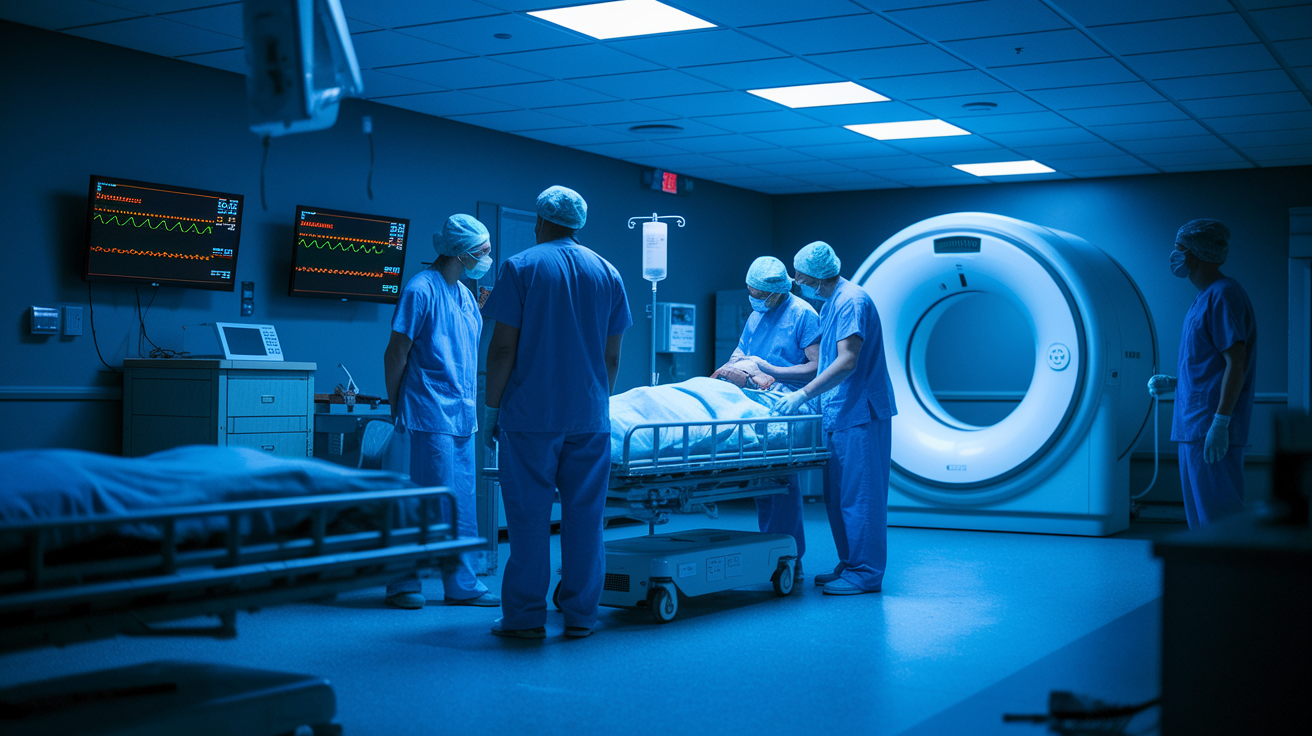
Emergency departments save lives and prevent permanent disability. They’re open 24/7 with teams trained in trauma, critical care, cardiology, neurology, and surgery. Every ER has immediate access to advanced imaging like CT scans, MRI, and ultrasound. They can admit you to the hospital or take you straight to the operating room if needed.
“Life-threatening” means exactly that. Without fast, expert help, the situation could lead to death or irreversible damage. These are the times when minutes matter and waiting is too risky. ERs see everything from heart attacks and strokes to severe allergic reactions and major trauma.
Some people worry they’re overreacting. If you’re unsure but have any of the symptoms below, choose safety. Emergency doctors would rather reassure you than have you wait at home when time-sensitive treatment could change everything.
Seek emergency care immediately if you experience:
- Chest pain, tightness, or pressure, especially with sweating, nausea, or pain spreading to your jaw, shoulder, or arm
- Sudden weakness or numbness on one side of your body, trouble speaking, facial droop, or sudden vision loss
- Severe difficulty breathing, gasping for air, wheezing that doesn’t get better, or feeling like you can’t get enough oxygen
- Uncontrolled bleeding, deep cuts, wounds that won’t stop bleeding after 10 minutes of direct pressure, or bleeding after a serious injury
- Broken bones with visible deformity, dislocated joints, or open fractures where you can see bone
- Head injuries with loss of consciousness, confusion, repeated vomiting, severe headache, or clear fluid leaking from your nose or ears
- Severe abdominal pain that’s sharp, stabbing, or cramping so badly it’s hard to move or stand
- Sudden confusion, change in mental status, difficulty waking someone, seizures, or thoughts of harming yourself or others
Conditions Appropriate for Urgent Care

Urgent care centers fill the gap between your primary care doctor and the emergency room. They’re built for problems that need attention today but not in the next five minutes. Most urgent care clinics have physicians, physician assistants, or nurse practitioners with training in family medicine, emergency medicine, or sports medicine. They can handle a wide range of injuries and illnesses, do basic procedures, order X-rays and lab tests, and write prescriptions.
Urgent care also makes sense when your regular doctor’s office is closed on evenings, weekends, or holidays and you need care that can’t wait until Monday morning. You’ll usually spend less time waiting than in an ER, and it costs much less. If the clinic team decides you need a higher level of care, they’ll stabilize you and send you to the emergency department.
Common reasons to visit urgent care include:
- Sprains, strains, and minor muscle injuries like ankle twists, pulled muscles, or minor sports injuries
- Small cuts and lacerations that may need stitches or wound glue, minor burns without large blisters
- Mild to moderate breathing problems like wheezing or shortness of breath from asthma or bronchitis, but you can still speak in full sentences
- Fever without a rash, flu symptoms, cough, sore throat, suspected strep throat, or ear infections
- Eye redness or discharge like pink eye, minor eye irritation
- Painful urination or symptoms of a urinary tract infection
- Vomiting and diarrhea without signs of severe dehydration (you can still drink fluids and keep some down)
- Insect bites, tick bites, or minor allergic reactions with localized swelling but no trouble breathing
- Simple fractures in fingers, toes, or wrists that are painful but not deformed or discolored
- Animal bites or scratches that need cleaning and evaluation for infection or rabies risk
Side‑by‑Side Comparison of Urgent Care and ER Services
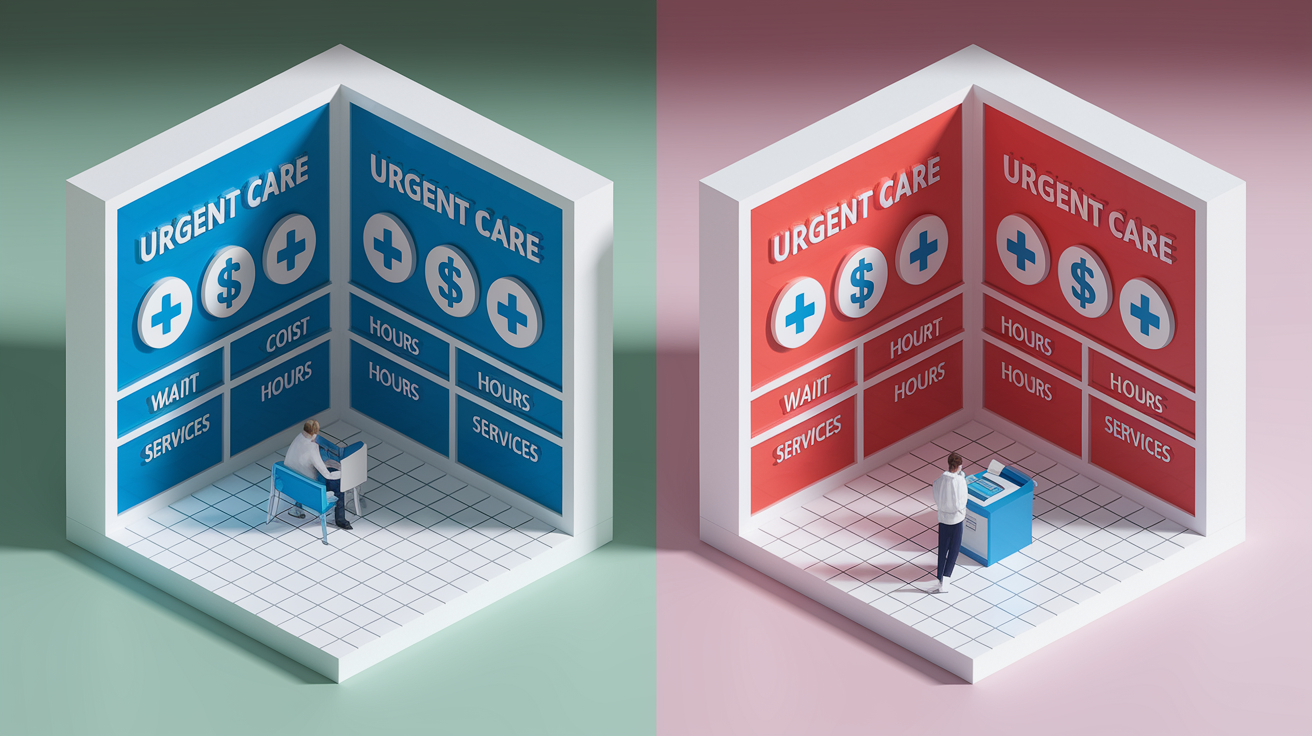
The clearest way to understand the difference is to compare them directly across the factors that matter most when you’re deciding where to go.
| Category | Urgent Care | ER | Notes |
|---|---|---|---|
| Cost | Hundreds of dollars or less depending on insurance; copay similar to primary care visit | Potentially thousands of dollars for the same complaint; higher copay required | ER visits trigger facility fees and higher charges; urgent care is far less expensive for the same non-emergency issue |
| Wait Times | Often 1.5 hours or less from arrival to discharge; some clinics post live wait times updated every 15 minutes | Can be several hours or more; ERs triage by severity so life-threatening cases go first | Almost 90% of the U.S. population lives within 20 minutes of an urgent care center; ER waits spike during COVID surges and winter respiratory illness peaks |
| Hours | Typically 7 days a week; weekdays 8 a.m. to 8 p.m., weekends and holidays 8 a.m. to 4 p.m.; some open 24 hours | 24 hours a day, 7 days a week, every day of the year | Urgent care extended hours help when your primary care office is closed; ER is always open |
| Available Services | X-rays, some lab tests (urinalysis, strep/flu/COVID tests), stitches, splinting, IV fluids, vaccinations, sports physicals | Advanced imaging (CT, MRI, ultrasound), specialist consults, surgical capability, hospital admission, life-saving interventions | Urgent care can stabilize and refer to ER when advanced diagnostics or specialist care is needed |
| Severity Level Treated | Non-life-threatening but urgent injuries and illnesses; stable patients who need same-day care | Life-threatening, rapidly worsening, or complex conditions requiring hospital-level resources | If you’re unsure whether your problem is life-threatening, it’s safer to go to the ER or call 911 |
| Diagnostic Capabilities | Basic X-ray, rapid testing (strep, flu, COVID), urinalysis, some blood work | Full-scale imaging (CT, MRI, ultrasound), cardiac monitoring, blood gas analysis, advanced lab panels | ERs can diagnose conditions requiring imaging beyond X-rays like pulmonary embolism, appendicitis, stroke, or internal bleeding |
One record-breaking day in May 2023 saw 313 patients in a single emergency department at once, and ambulance offload delays stretched as long as 8 hours. That kind of volume explains why ER waits can feel endless when your complaint isn’t life-threatening. Urgent care visits have grown by about 60% since 2019, partly because patients learned they can get faster, more affordable care for non-emergencies.
Step‑by‑Step Text‑Based Decision Flowchart

When you’re in pain or worried, a simple checklist helps. This flowchart walks you through the decision step by step, based on the severity and timing of your symptoms.
-
Are you having chest pain, trouble breathing, signs of stroke (weakness, slurred speech, facial droop), or severe bleeding? If yes, call 911 or go to the ER immediately. If no, go to step 2.
-
Are you confused, unable to wake up, having seizures, or experiencing thoughts of harming yourself or others? If yes, call 911 or go to the ER now. If no, go to step 3.
-
Did you have a major injury like a car accident, fall from height, head injury with loss of consciousness, open fracture, or deep wound? If yes, call 911 or go to the ER. If no, go to step 4.
-
Do you have a high fever (over 103°F) with a rash, vaginal bleeding during pregnancy, or severe abdominal pain? If yes, go to the ER. If no, go to step 5.
-
Is your injury or illness urgent and you can’t wait for a regular doctor’s appointment, but you’re stable and not in immediate danger? Examples include sprains, minor cuts that might need stitches, fever without rash, flu symptoms, ear infection, or painful urination. If yes, go to urgent care (check hours first). If no, go to step 6.
-
Can your problem wait a day or two, or could it be handled by a phone call or video visit? Examples include cold symptoms, pink eye, medication refill, or mild rash. If yes, call your primary care office, schedule a same-day or next-day appointment, or use telehealth. If no, go to step 7.
-
Are you unsure whether your symptoms are urgent or life-threatening? If yes, call your primary care office or your insurance advice nurse line (the number is often on your insurance card). They can help you decide where to go. If no answer or symptoms are worsening quickly, go to the ER or call 911.
-
For infants under 3 months old with any fever, or children with difficulty breathing, blue/purple/gray skin or lips, sudden behavior changes, suspected poisoning, or severe headache after a head injury, go to the ER or call 911. If your pediatrician has a nurse line, expect a callback within about 10 minutes. If no callback within 20 minutes and the child may be in danger, go to the ER.
Final Words
If you’re choosing between urgent care and the ER right now, this post gave a quick decision guide, a clear list of ER signs, conditions that fit urgent care, a side‑by‑side comparison, and a simple flowchart.
Use the checklists to spot red flags like chest pain, severe bleeding, or trouble breathing. For sprains, mild cuts, ear infections, or flu symptoms, urgent care is usually fine. Track when it started and severity (0–10).
Knowing when to go to urgent care vs emergency room helps you act fast and feel more confident about the next step.
FAQ
Q: How to decide between ER and urgent care?
A: Deciding between the ER and urgent care depends on life‑threatening signs. Use the ER for chest pain, severe bleeding, breathing trouble, stroke signs, loss of consciousness, or major trauma; urgent care for minor injuries.
Q: Should I go to urgent care for a cough?
A: Going to urgent care for a cough is reasonable when it’s mild, without shortness of breath, high fever, coughing blood, or high‑risk conditions like pregnancy or immune suppression; seek emergency care if breathing is hard.
Q: Should I go to urgent care for leg pain?
A: Going to urgent care for leg pain is appropriate for mild strains, minor swelling, or skin injuries. Seek the ER if you can’t bear weight, have severe deformity, numbness, loss of pulse, rapid worsening, or suspected clot.
Q: What are the red flags for urgent care?
A: Red flags for urgent care are signs that you need the ER instead: chest pain, severe bleeding, trouble breathing, sudden weakness or slurred speech, unconsciousness, severe head injury, major burns, or uncontrolled severe pain.