

Think you have to wait out nausea? Think again.
When that queasy wave hits, you want relief now, not later.
This guide shows simple, fast steps you can try immediately at home.
Sit up, get fresh air, breathe slowly, try ginger or peppermint, press the P6 point, and sip small amounts of cool water.
They target the real causes of nausea and often work within minutes.
I’ll also note what to watch for, when to get help, and which medicines can help if home fixes fail.
Fast-Acting Steps for Immediate Nausea Relief (Do These First)

When nausea hits, you want something that works now. Not in an hour. The fastest fixes don’t require a pharmacy trip, just your body, some fresh air, and maybe a few things you’ve already got at home. These target what’s actually making you queasy and can kick in within minutes.
Here’s what to do right away:
- Sit up or prop yourself at an angle. Lying flat lets stomach contents push upward, which makes things worse.
- Get outside or crack a window. Fresh air cuts through that stuffy, overheated feeling that comes with nausea.
- Breathe slowly for a few minutes. In through your nose, out through your mouth. It calms your nervous system down.
- Suck on peppermint candy or chew gum. The flavor covers up bad tastes and distracts your brain from nausea signals.
- Nibble raw ginger, a ginger snap, or sip ginger tea. Ginger has compounds that work like some anti-nausea meds.
- Press the inside of your wrist. Find the groove between two tendons about two finger-widths below your palm (that’s the P6 point) and hold firm pressure for 30 to 60 seconds.
- Sniff something mild like lemon or peppermint. Put a couple drops of essential oil on a tissue or use a diffuser. If you’re putting it on skin, mix it with coconut or almond oil first.
- Sip cold water slowly. Small amounts keep you hydrated without overwhelming your stomach.
These work because they go after the real causes: overheating, bad air, anxiety, reflux, sensory overload. Fresh air and breathing bring your heart rate and body temp down. Ginger and peppermint hit receptors in your gut that control nausea. Acupressure taps into a nerve pathway that tells your brain to ease up. Studies show that when home stuff isn’t enough, meds can wipe out symptoms in up to 97% of cases. But start here first.
Understanding What Causes Sudden Nausea and Why It Happens

Nausea isn’t a disease. It’s your body’s alarm telling you something’s off. Could be your stomach, your inner ear, your hormones, even your stress level. Common triggers include food that didn’t sit right, motion (car, boat, spinning rides), acid reflux pushing stuff upward, medication side effects, not enough water, anxiety, hormonal swings during pregnancy or your period. Sometimes it’s just your brain getting overwhelmed by strong smells, bright lights, or heat.
Knowing the cause helps you pick what to do next. Greasy food nausea? Rest upright and sip water. Motion sickness? Fresh air and wrist pressure. Anxiety? Slow breathing and distraction. One thing that makes it worse no matter what: carbonated drinks and sugary beverages. They bloat you, worsen reflux, and can ramp up queasiness even though lots of people grab ginger ale when they feel sick.
Here are the usual everyday culprits:
- Too much food, too fast, or stuff that’s spicy, fatty, or hard to digest
- Motion (cars, boats, rides)
- Strong smells (perfume, cooking, smoke, cleaning stuff)
- Heat, humidity, stuffy rooms
- Stress or panic that flips your fight-or-flight switch
If you can pin down your trigger, you’re halfway there. Smells set you off? Fresh air and calming scents help. Reflux? Elevate your upper body and don’t lie flat.
Natural Remedies for Rapid Nausea Control (Ginger, Peppermint, Aromatherapy)
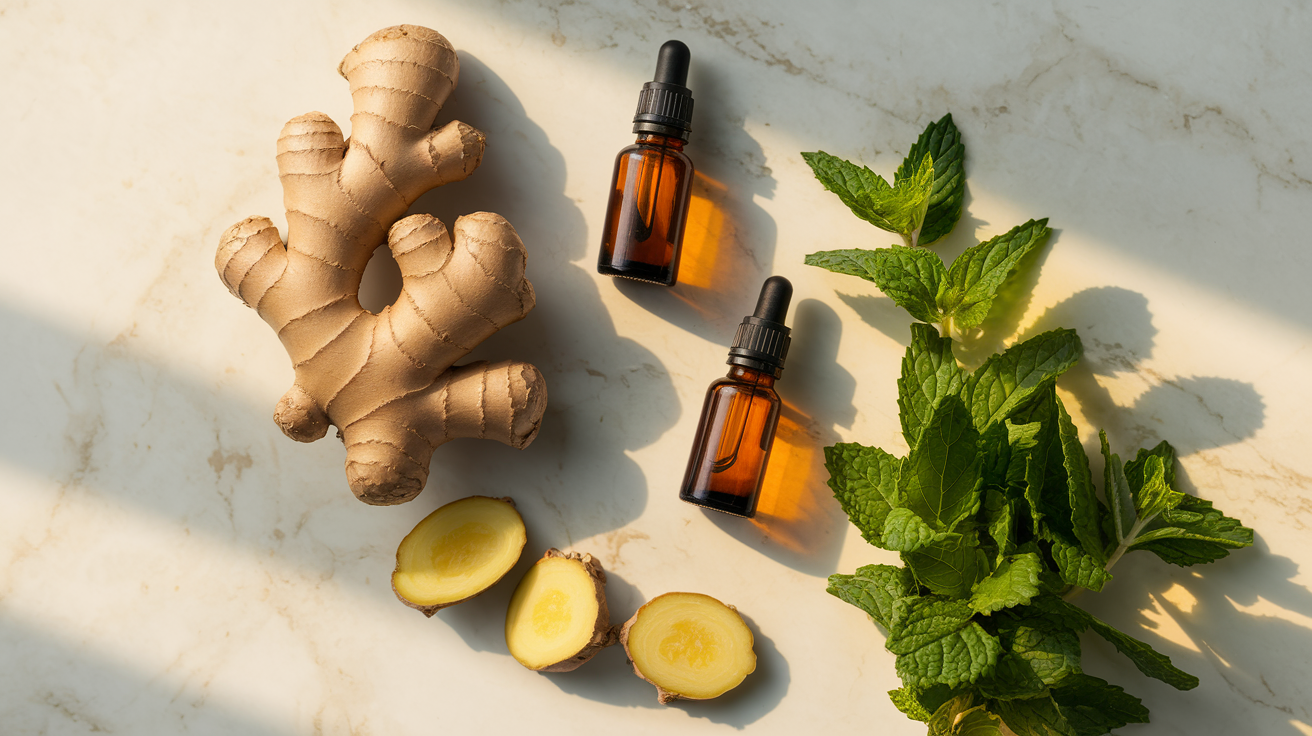
Natural options give you fast relief without going straight to medication. Ginger, peppermint, and aromatherapy all have evidence backing them up and work quickly. They’re safe for most people, easy to find, and effective for pregnancy, chemo side effects, everyday queasiness.
Ginger
Ginger’s got gingerol and shogaol, compounds that act on the same gut and brain receptors as some prescription anti-nausea drugs. Studies support it for pregnancy nausea and chemo-related sickness. Any form works as long as it’s real ginger. Nibble a peeled piece of raw ginger, eat a few ginger snaps, steep fresh slices in hot water for five minutes and sip the tea, chew ginger gum, or drink ginger ale that lists actual ginger in the ingredients (lots of brands just use fake flavoring). Start small. Too much at once can feel sharp. If you’re pregnant or on blood thinners, check with a clinician before using it daily, but occasional use is usually fine.
Peppermint
Peppermint candy, gum, or tea helps when you’ve got a bad taste in your mouth from meds or reflux. The menthol has a mild numbing, cooling effect that soothes your stomach and distracts your taste buds. Sucking or chewing also keeps your mouth busy, which can break the loop between your brain and gut that drives nausea. Peppermint tea works too: steep a bag or fresh leaves for three to five minutes, then sip slowly. Skip peppermint if you’ve got bad acid reflux or GERD. It can relax the valve at the top of your stomach and make things worse for some people.
Aromatherapy
Breathing in gentle scents like lavender, lemon, or peppermint can cut nausea fast, especially if anxiety or strong odors kicked it off. Put two or three drops of essential oil on a tissue and hold it near your nose, breathing slowly. You can also put the same amount in a diffuser. If you want to put oil on your skin (wrists, temples), always dilute it first with a carrier oil like coconut, jojoba, almond, or olive. Undiluted oils can irritate or burn. Use about one drop of essential oil per teaspoon of carrier. Lavender’s calming and good for stress nausea. Lemon and peppermint are sharper, more energizing, useful when you feel sluggish and queasy at the same time.
Hand Pressure and Positioning Tricks to Stop Nausea Fast

How you position yourself and a simple pressure trick can make a real difference in how fast nausea fades. When you’re upright or slightly reclined, gravity keeps stomach contents down and cuts the chance of acid backing up into your esophagus. Lying flat, especially right after eating, lets digestive juices flow backward and worsens reflux nausea. Staying still helps too. Your inner ear and stomach are in constant contact, and sudden position shifts can make queasiness spike.
Acupressure on the P6 Point
The P6 point, also called Nei Guan, is on the inside of your wrist. Turn your palm up and measure about two finger-widths down from the crease where your hand meets your wrist. You’ll feel a groove between two big tendons. That’s it. Press firmly with your thumb or finger and hold steady for 30 to 60 seconds. Repeat every few minutes if you need to. Studies show this cuts nausea from cancer treatment, surgery, and motion sickness. If pressing with your finger gets tiring, you can grab acupressure wristbands at most pharmacies. They’ve got a small plastic bead that applies steady pressure to the P6 point while you wear them. They’re reusable, no batteries, and work passively while you rest or move around.
Key posture tweaks that reduce nausea quickly:
- Sit upright or recline at about 45 degrees. Don’t lie flat.
- Keep your head elevated above your stomach. Use pillows if you need to rest.
- Move slowly and avoid quick head turns or bending. Sudden movements confuse your inner ear.
- Stay still for a few minutes after eating. Let your stomach settle before you get up or change position.
Hydration, Bland Foods, and Safe Home Practices That Ease Nausea Quickly
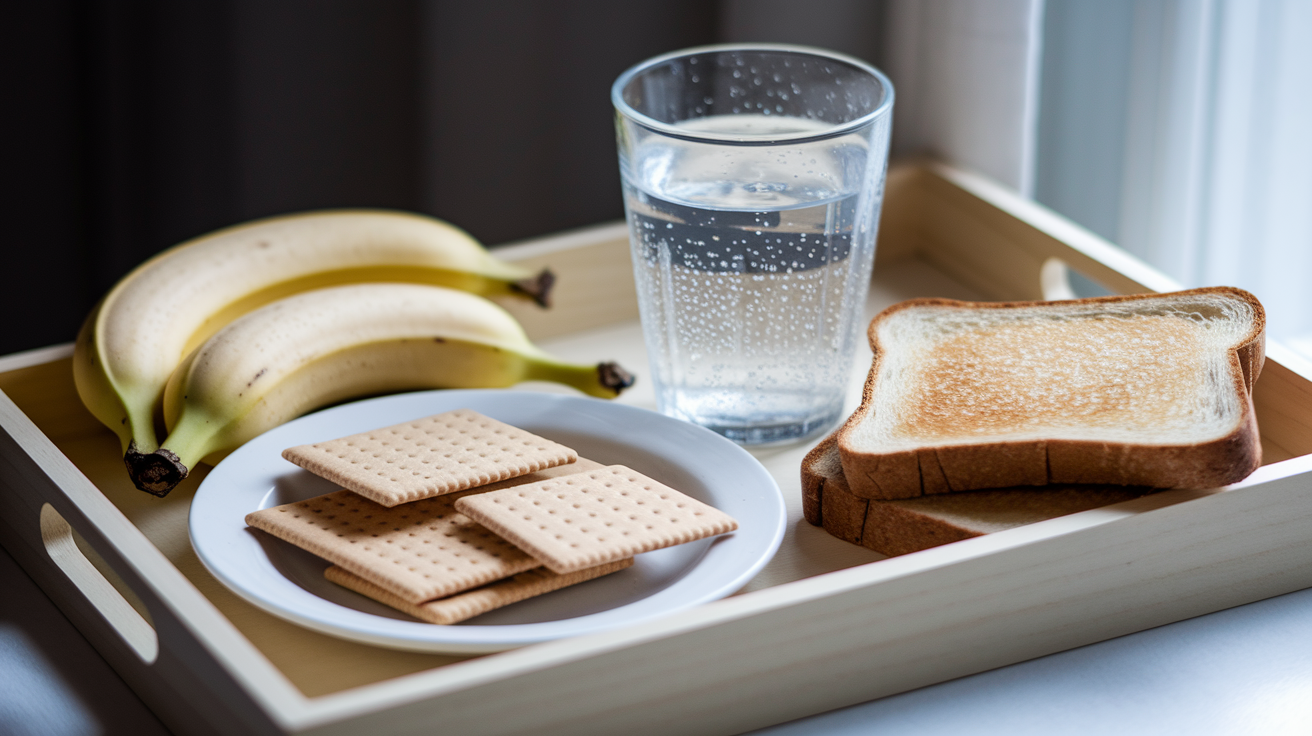
What you eat and drink, and how you do it, can either settle your stomach or make things worse. Small, frequent sips of cold, clear liquids keep you hydrated without overwhelming your gut. Bland foods give your system something mild to work on, which can actually cut nausea by preventing that empty, acid-filled feeling that makes queasiness worse. Room-temp or cold foods produce less smell than hot meals, so they’re less likely to set off smell-triggered nausea.
What to do now:
- Take small sips of cold water, clear broth, or diluted fruit juice every few minutes. Don’t gulp down large amounts.
- Start with plain crackers, toast, or rice. These bland, starchy foods soak up stomach acid and settle things down.
- Add mild fruit like bananas or applesauce once crackers stay down. They give you gentle nutrition without strong flavors.
- Avoid spicy, fatty, or fried stuff. Takes longer to digest and can ramp up queasiness.
- Stay away from strong smells. Perfume, cooking odors, smoke, cleaning products all trigger nausea when you’re sensitive.
- Eat several small meals instead of three big ones. Smaller portions are easier to handle and keep your blood sugar steady.
Small, frequent intakes beat big meals because they prevent your stomach from stretching too much, which pushes contents upward and worsens reflux. When you’re already queasy, an empty stomach can feel just as bad as being too full. Gentle, bland food gives your digestive system a task without overloading it. If you’re vomiting and can’t keep anything down, the 12-hour mark matters. If you haven’t kept fluids down for longer than 12 hours, contact a healthcare provider. Dehydration brings weakness, dizziness, confusion, and you might need IV fluids to get back on track.
Medication Options for Fast Nausea Relief (OTC and Prescription)

When home stuff doesn’t cut it, medications can stop nausea quickly. Over-the-counter options don’t need a prescription and work for lots of common causes like motion sickness, mild food reactions, general queasiness. Dramamine (dimenhydrinate) blocks signals in your inner ear and brain that trigger nausea, especially from motion. Pepto-Bismol (bismuth subsalicylate) coats your stomach lining and cuts irritation, which helps with nausea from indigestion or mild food issues. Both are easy to find at pharmacies and grocery stores. Follow the package directions. Taking more than recommended won’t speed up relief and can cause drowsiness or constipation.
Prescription Antiemetics
If over-the-counter stuff isn’t enough, a clinician can prescribe stronger antiemetic meds. Ondansetron (Zofran) blocks serotonin receptors in your gut and brain, stopping nausea signals before they register. It’s commonly used for chemo-related nausea but works for severe vomiting from other causes too. Prochlorperazine (Compazine) and promethazine (Phenergan) are older meds that block dopamine and histamine pathways. They work but can make you drowsier. Studies show prescription antiemetics can eliminate nausea in up to 97% of cases when used right. Your clinician picks a medication based on your symptoms, what’s causing the nausea, and any other meds you’re on.
| Medication | Typical Use | Notes |
|---|---|---|
| Dramamine (dimenhydrinate) | Motion sickness, mild nausea | OTC; can cause drowsiness |
| Pepto-Bismol (bismuth subsalicylate) | Indigestion, mild stomach upset | OTC; avoid if allergic to aspirin |
| Ondansetron (Zofran) | Severe nausea, chemotherapy, surgery | Prescription; fast-acting, minimal drowsiness |
| Promethazine (Phenergan) | Severe nausea, vomiting | Prescription; strong sedative effect |
If you can’t keep fluids down for more than 12 hours, vomiting lasts more than two days (adults), or you’ve thrown up three or more times in one day, contact a healthcare provider. Persistent nausea lasting more than a month, unexplained weight loss, or new symptoms like severe headache or stiff neck also mean you should call. Meds are a tool, not the first step. But when home measures fail, they give fast, reliable relief and prevent dehydration or worse problems.
When Immediate Nausea Becomes Concerning and You Need Medical Care

Most nausea goes away on its own or with simple home care. But certain symptoms mean it’s time to call a clinician or head to urgent care. Red flags point to dehydration, a serious cause, or a complication that needs professional help. Knowing these thresholds keeps you from worrying unnecessarily while catching real problems early.
Call your healthcare provider or get care if any of these apply:
- Vomiting’s lasted longer than two days for adults, 24 hours for kids under two, or 12 hours for infants.
- You can’t keep fluids down for more than 12 hours. This puts you at high risk for dehydration.
- You haven’t peed for eight hours or longer, or your urine’s very dark yellow or brown.
- You’ve vomited three or more times in one day and home stuff isn’t helping.
- You’ve got a new, severe headache with nausea, especially if you’ve never had it before. Could be a migraine, but it can also signal something more serious.
- Your vomit is green, has blood in it, or looks like coffee grounds. This suggests bleeding or bile and needs immediate attention.
- You’ve got signs of severe dehydration: intense thirst, dry mouth, dizziness when you stand, weakness.
- You think you were poisoned or took a medication or substance that might’ve caused the nausea. Go to an emergency room or call poison control right away.
A clinician will ask about timing, triggers, and other symptoms: when it started, what makes it better or worse, whether you’ve got a fever, stomach pain, or other new issues, what meds or foods you’ve had recently. They might order blood tests, imaging, or other diagnostics to find the cause. Often they can prescribe an antiemetic or give IV fluids to relieve dehydration and stop the nausea cycle. Don’t wait if symptoms are severe or won’t quit. Early help prevents complications and gets you back to feeling normal faster.
Final Words
in the action, try simple moves first: sit up, get fresh air, breathe slowly, sip cold water, try peppermint or ginger, or press the P6 point.
Next, use posture, bland snacks, and diluted aromatherapy while you watch what triggers it and how long it lasts. Medications can help if home steps don’t work, and we listed clear red flags to get care.
Remember these tips for how to stop nausea immediately, and get help if symptoms stay or worsen. You’ll likely feel better soon.
FAQ
Q: What settles nausea quickly?
A: Quickly settling nausea usually involves sitting upright, getting fresh air, taking slow deep breaths for several minutes, sipping cold water slowly, sucking ginger or peppermint, and applying steady pressure to the P6 wrist point.
Q: What is the pressure point for nausea?
A: The pressure point for nausea is the P6, called Nei Guan, on the inner wrist about three finger-widths from the wrist crease between two tendons; press firmly for 30 to 60 seconds or use a wristband.
Q: Should I lie down if I feel like throwing up?
A: If you feel like throwing up, sit upright or recline with your upper body elevated, avoid lying flat, move slowly, get fresh air, and sip cold liquids; seek care if you faint, have chest pain, or vomiting persists.
Q: What is the body trick for nausea?
A: The body trick for nausea is deep belly breathing combined with steady pressure on the P6 wrist point; try five minutes of slow breaths plus 30 to 60 seconds of firm pressure.