
What if you didn’t need a pill to stop a headache?
Simple home steps can often ease pain within 10 to 30 minutes.
This guide shows fast, natural fixes you can try right now—drink steady water, use a cold or warm compress based on the type of pain, try gentle massage or diluted peppermint or lavender oil, and use calming breathing to quiet your nervous system.
You’ll learn how to match the remedy to the trigger, what to watch, and when to seek medical care.
Fast Natural Remedies for Immediate Headache Relief at Home
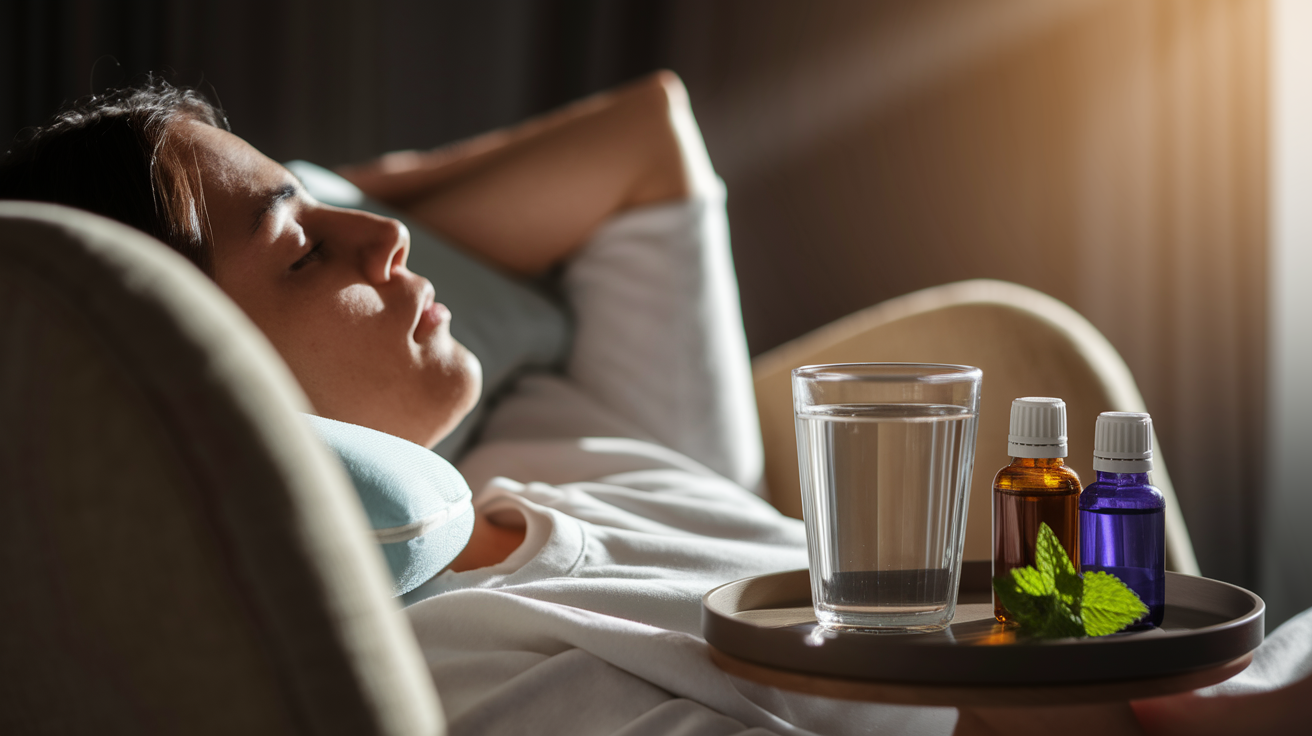
When a headache hits, you want relief right now. Not an hour from now. The good news? Simple, natural steps can reduce pain within 10 to 30 minutes. These methods work by addressing the most common physical triggers: dehydration, muscle tension, inflammation, and overstimulation of pain receptors. Hydration reverses the blood vessel constriction caused by low fluid levels, usually within 15 to 60 minutes. Cold therapy numbs pain signals and reduces blood flow to throbbing areas, while heat relaxes tight muscles that squeeze nerves in your neck and scalp.
Start with what your body needs most. If you haven’t had water in a few hours, dehydration’s likely playing a role. If your neck and shoulders feel tight, tension’s the culprit. If light and noise bother you, your nervous system’s overreacting. Matching the remedy to the trigger makes relief faster and more effective.
Essential oils like peppermint and lavender offer a two-pronged benefit. Peppermint creates a cooling sensation that distracts from pain, and lavender calms the stress response that can make headaches worse. Gentle massage increases local blood flow and triggers the release of endorphins, your body’s natural pain relievers. None of these steps require a prescription, and most can be done with items you already have at home.
Try these five actions right now:
- Drink 250 to 500 ml of plain water immediately, then sip another 150 to 250 ml every 15 to 30 minutes for the next hour.
- Lie down in a quiet, dim room for 10 to 20 minutes with your head supported and your neck in a neutral position.
- Apply a cold compress wrapped in cloth to your forehead for 15 to 20 minutes if the pain’s throbbing. Use a warm compress on the back of your neck for 15 to 20 minutes if your muscles feel tight.
- Inhale 1 to 2 drops of peppermint or lavender oil on a tissue for 5 to 10 minutes, or dilute 2 to 3 drops in 10 ml of carrier oil and rub gently onto your temples.
- Press your fingertips in small circles on each temple for 1 to 2 minutes, then apply firm, steady pressure to the base of your skull for 1 to 3 minutes.
Hydration and Nutrient-Based Natural Headache Relief
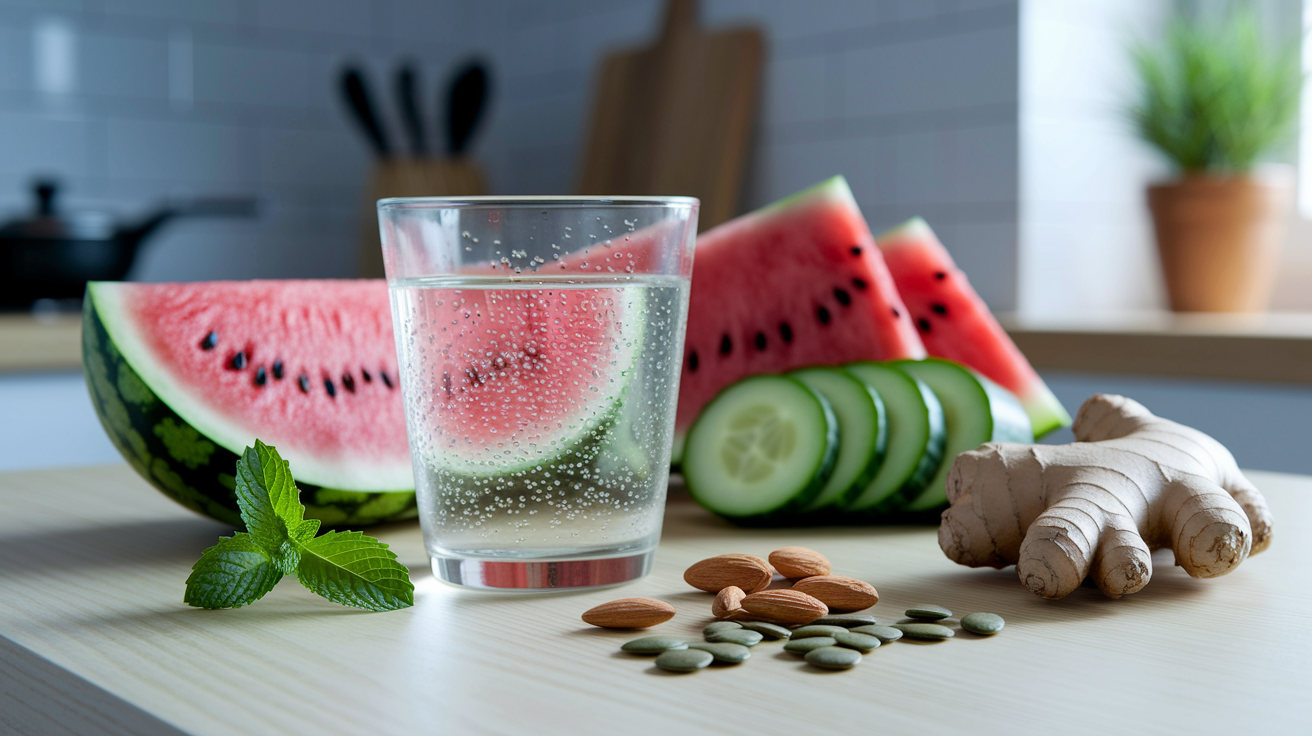
Dehydration’s one of the fastest and most overlooked headache triggers. When your body loses more fluid than it takes in (through heat, exercise, or simply not drinking enough), your blood volume drops slightly, causing blood vessels in your brain to narrow. That constriction reduces oxygen flow and sets off pain signals. Drinking water steadily over 30 to 60 minutes can reverse this process and bring noticeable relief. Sip 150 to 250 ml every 15 to 30 minutes rather than gulping a large amount at once, which helps your body absorb and use the water more efficiently.
Certain foods support headache relief by supplying key nutrients that relax blood vessels, reduce inflammation, and stabilize blood sugar. Magnesium-rich snacks like a handful of almonds or pumpkin seeds can ease muscle tension and may prevent migraine triggers. Ginger contains natural anti-inflammatory compounds called gingerols and shogaols. Add fresh ginger to hot water for tea, blend it into a smoothie, or stir grated ginger into soup. High-water fruits like watermelon, cucumber, and celery provide both hydration and gentle natural sugars that keep energy steady without spiking insulin.
Six foods to reach for when a headache starts:
- Water and high-water fruits (watermelon, cucumber, oranges) to rehydrate quickly
- Almonds, cashews, or pumpkin seeds for a magnesium-rich snack you can carry anywhere
- Fresh or powdered ginger in tea, smoothies, or warm dishes for anti-inflammatory support
- Bananas for magnesium and steady carbohydrate energy
- Berries (blueberries, strawberries) for antioxidants that reduce oxidative stress
- Leafy greens like spinach or kale, which supply magnesium and can be added to salads or blended into drinks
Essential Oils, Aromatherapy, and Natural Scent-Based Headache Relief
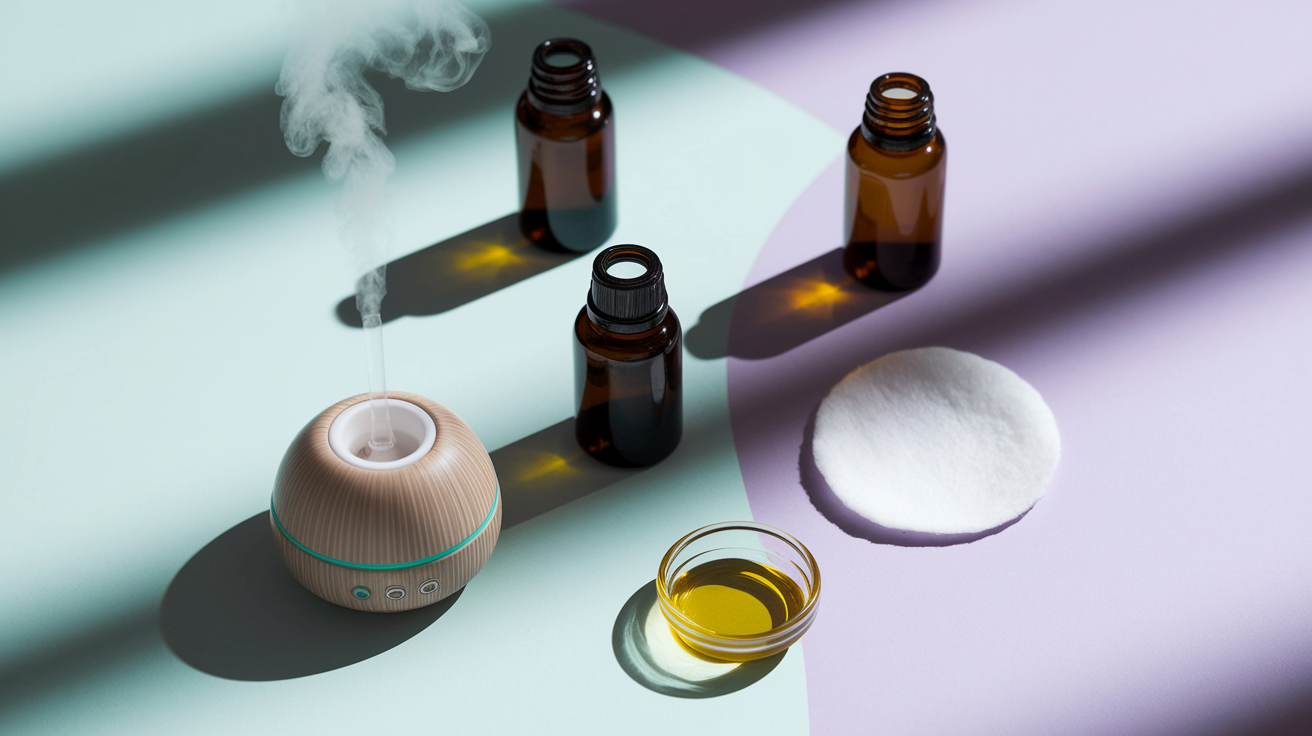
Essential oils offer a gentle, non-drug option that works through smell and skin absorption. Peppermint oil contains menthol, which activates cooling receptors on your skin and in your nasal passages, creating a distraction from pain and reducing the perception of throbbing. Lavender oil has a calming effect on the nervous system, helping to lower the stress and anxiety that often make headaches feel worse. Both oils have been studied in small trials and show modest but real benefit, especially for tension-type headaches.
You can use essential oils in two main ways: inhalation and topical application. For inhalation, place 1 to 2 drops of peppermint or lavender oil on a tissue or cotton ball and breathe slowly near your nose for 5 to 10 minutes. This method’s fast, safe for most people, and requires no preparation. For topical use, always dilute the oil first. Essential oils are highly concentrated and can irritate or burn skin if applied directly.
How to Apply Oils Safely
Mix 2 to 3 drops of essential oil into 10 ml of a carrier oil such as almond, jojoba, or coconut oil. This creates a 1 to 2 percent dilution, which is effective and gentle on skin. Rub a small amount onto your temples, the back of your neck, and behind your ears. Avoid the area near your eyes and don’t apply oil to broken or irritated skin. If you’ve never used a particular oil before, do a patch test on the inside of your forearm and wait 24 hours to check for redness or itching. Never swallow essential oils, and keep bottles out of reach of children and pets.
Cold, Heat, and Temperature-Based Natural Headache Relief Techniques

Temperature therapy’s one of the oldest and most effective natural headache remedies because it directly changes blood flow and nerve activity in the painful area. Cold constricts blood vessels, slows nerve signals, and numbs pain receptors, making it especially helpful for migraines and throbbing headaches. Heat does the opposite. It relaxes tight muscles, increases circulation, and eases the dull, achy pain of tension headaches. Knowing which type of headache you have helps you choose the right temperature.
For migraine-like pain that throbs and worsens with movement, apply a cold pack wrapped in a thin towel to your forehead, temples, or the top of your head for 15 to 20 minutes. You can repeat this every 30 to 60 minutes if needed, up to two or three cycles. For tension headaches that feel like a tight band around your head or a knot at the base of your skull, use a warm compress or heating pad on the back of your neck and upper shoulders for 15 to 20 minutes. A hot shower can also work. Let warm water run over your neck and shoulders to release muscle tension. Some people find that alternating cold and heat in short intervals (5 minutes each) gives the best relief when the headache has both tension and throbbing components.
| Method | Headache Type | Duration |
|---|---|---|
| Cold pack to forehead or temples | Migraine, throbbing headache | 15–20 minutes, repeat every 30–60 minutes |
| Warm compress to neck base | Tension headache, muscle tightness | 15–20 minutes |
| Hot shower on neck and shoulders | Tension headache, stress-related pain | 10–15 minutes |
| Alternating cold and heat (5 min each) | Mixed or uncertain headache type | Total 20–30 minutes |
Massage, Acupressure, and Physical Relaxation for Natural Headache Relief
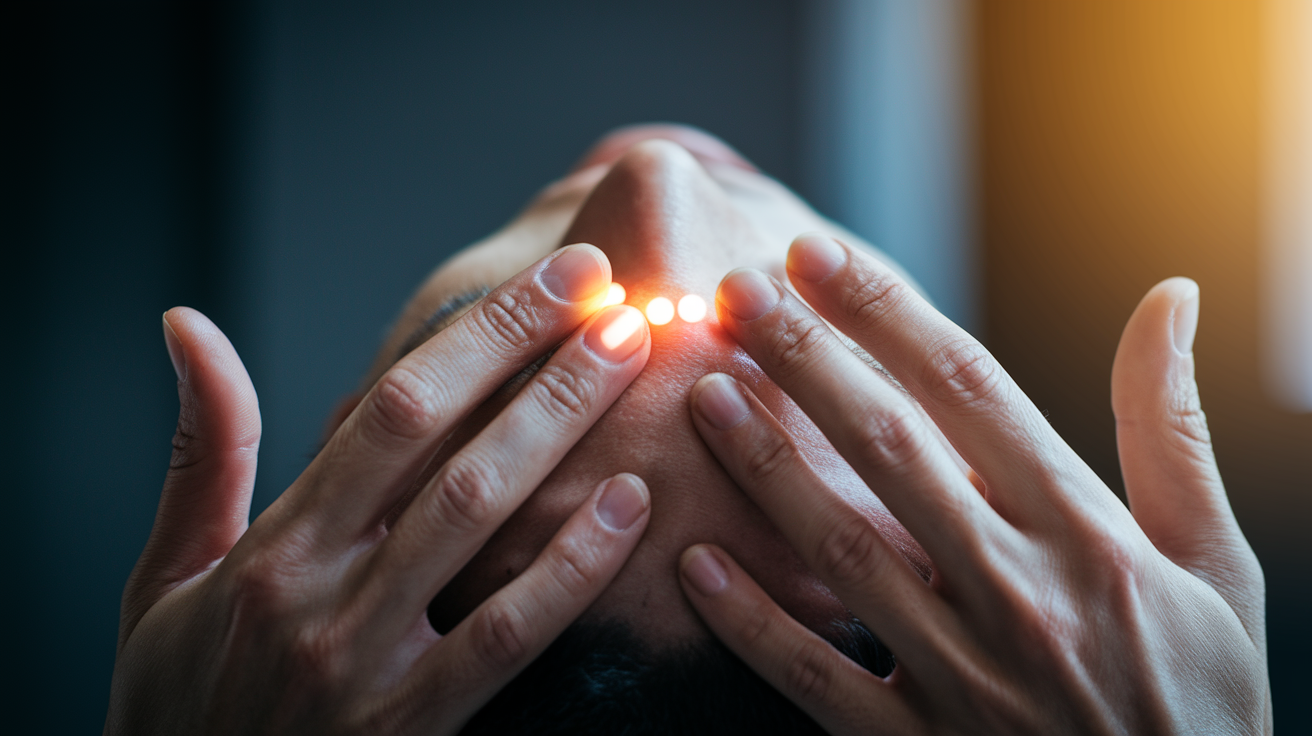
Gentle touch and pressure can interrupt pain signals, release muscle knots, and trigger the body’s own pain-relief chemicals. Massage works especially well for tension headaches caused by tight muscles in your neck, shoulders, and scalp. You don’t need professional training. Simple self-massage techniques can bring noticeable relief within 5 to 10 minutes. The key’s to use steady, moderate pressure and focus on areas where you feel tightness or tenderness.
Acupressure adds another layer by targeting specific points that traditional medicine links to headache relief. The most commonly used point is LI4, located in the fleshy web between your thumb and index finger. Pressing this point for 30 to 60 seconds is thought to release endorphins and reduce pain perception. Another effective spot’s the base of your skull, where the neck muscles attach. Firm, sustained pressure here can relieve the muscle spasms that radiate pain up into your head. If light touch feels painful (a symptom called allodynia, common during migraines), skip massage until the acute pain settles.
Five-step massage and acupressure routine:
- Sit comfortably in a quiet space and take three slow, deep breaths to relax your shoulders.
- Place your fingertips on your temples and press gently while making small clockwise circles for 1 to 2 minutes on each side.
- Move your thumbs to the base of your skull, just above where your neck meets your head, and apply firm, steady pressure for 30 to 60 seconds, then make small circular motions for another 1 to 2 minutes.
- Find the LI4 point in the web between your thumb and index finger on one hand, press firmly for 30 to 60 seconds, release, and repeat three times. Switch to the other hand (avoid this point if you’re pregnant).
- Finish by gently massaging the back of your neck with both hands, using a kneading motion for 2 to 3 minutes. Keep the pressure moderate to avoid increasing muscle spasm.
Stress, Breathing, and Mind–Body Practices for Natural Headache Relief
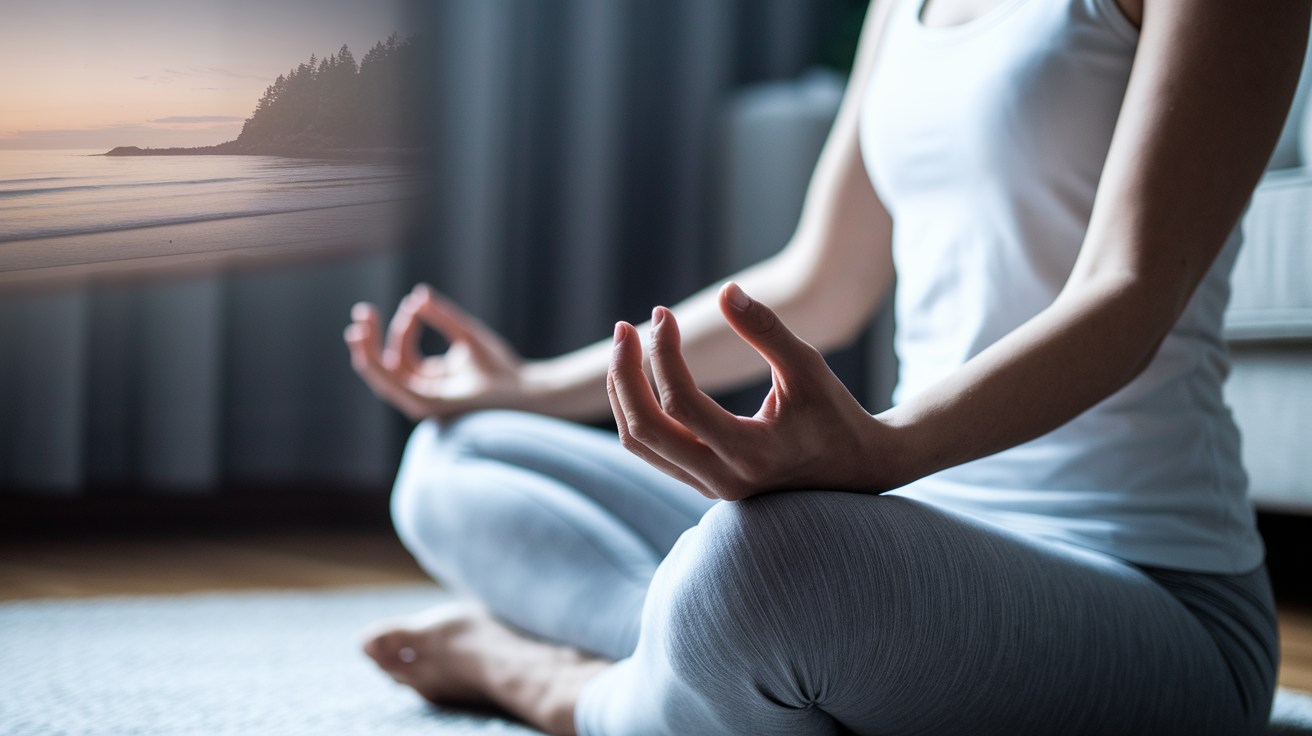
Stress is one of the most common headache triggers, and it works through multiple pathways. It tenses your muscles, raises your blood pressure, disrupts your sleep, and keeps your nervous system in a state of high alert. Calming techniques that slow your breathing and relax your body can reduce headache intensity within minutes by lowering the stress hormones circulating in your bloodstream. Deep, controlled breathing shifts your body from the fight-or-flight response into a rest-and-digest mode, which reduces pain sensitivity and promotes healing.
Progressive muscle relaxation and guided imagery are two other evidence-backed methods. Progressive muscle relaxation involves tensing a muscle group for 5 to 10 seconds, then releasing it completely for 20 to 30 seconds. This contrast helps you notice where you’re holding tension and teaches your body how to let go. Guided imagery asks you to visualize a calm, peaceful scene in vivid detail for 5 to 10 minutes, which distracts your brain from pain signals and reduces the emotional distress that amplifies headaches.
How to Perform a 5-Minute Breathing Routine
Find a quiet, comfortable place to sit with your back supported and your feet flat on the floor. Close your eyes or soften your gaze. Inhale slowly through your nose for a count of seven, letting your belly expand. Hold your breath gently for a count of four. Exhale slowly through your mouth for a count of eight to nine, letting all the air out. Repeat this cycle six to ten times, aiming for a rhythm of about four to six breaths per minute. If you feel lightheaded, return to normal breathing for a moment, then try again with shorter counts.
Four quick calming practices to reduce headache pain:
- Practice the 7-4-8 breathing routine for 5 minutes as soon as you notice tension building.
- Spend 10 minutes doing progressive muscle relaxation, starting with your feet and working up to your face.
- Use a guided imagery recording or app to visualize a calm beach or forest scene for 5 to 10 minutes.
- Take a 5-minute break from screens, close your eyes, and listen to quiet instrumental music or nature sounds.
Natural Dietary Patterns and Trigger Management to Reduce Recurring Headaches
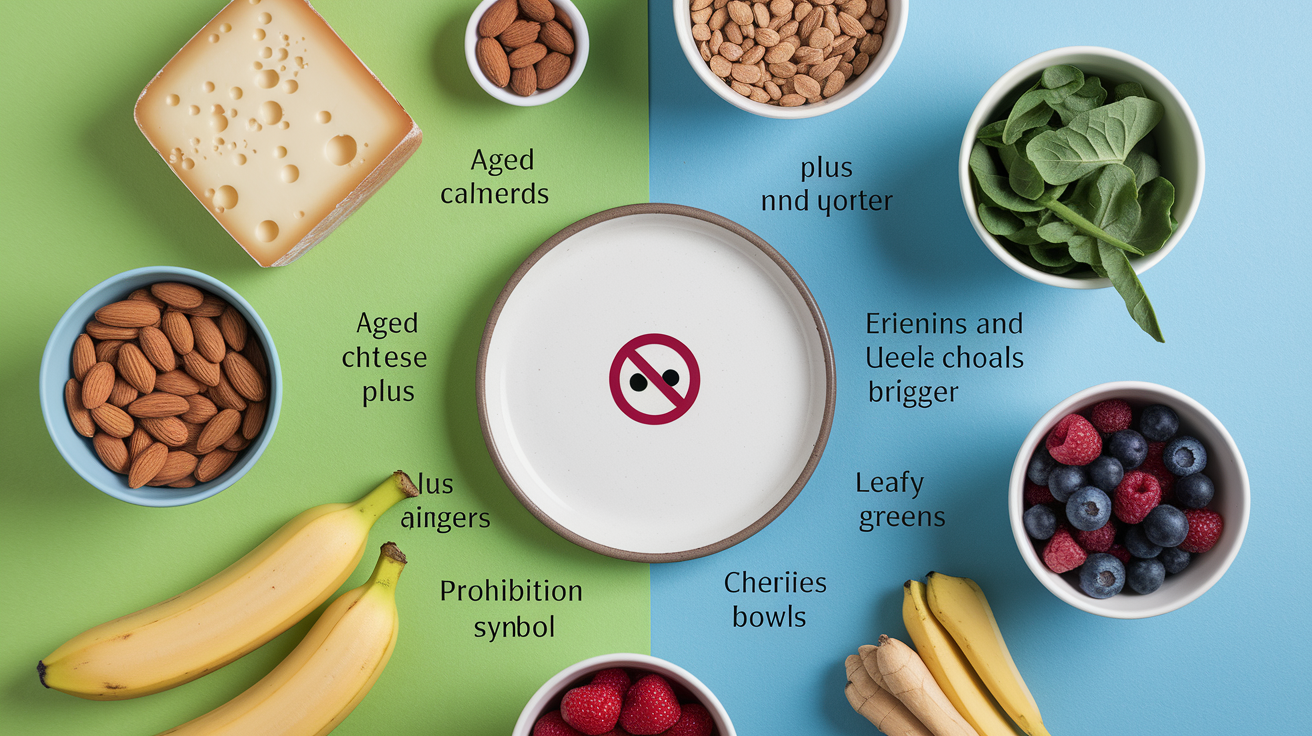
What you eat (and when you eat) can either prevent headaches or set them off. Skipping meals causes blood sugar to drop, which triggers the release of stress hormones that constrict blood vessels and create pain. Eating large amounts of fast-digesting carbohydrates (white bread, sugary snacks, sweetened drinks) causes a rapid spike in blood sugar followed by a crash 1 to 2 hours later, and that crash can trigger a headache. Keeping your blood sugar steady with regular meals that include protein, healthy fats, and complex carbohydrates is one of the simplest and most effective natural prevention strategies.
Certain foods contain compounds that can trigger headaches in sensitive people. Tyramine, found in aged cheeses and cured meats, can cause blood vessels to constrict and then dilate, leading to migraine-like pain. Nitrates in processed meats and MSG in fast food and packaged snacks can have similar effects. Artificial sweeteners, especially aspartame, are a common trigger for some individuals. Alcohol, particularly red wine, can cause headaches through dehydration, histamine release, and effects on blood vessels. If you get frequent headaches, try eliminating one or two of these triggers for two weeks and track whether your symptoms improve. For more details on helpful foods, see 9 foods that help with headaches.
| Trigger | Why It Causes Headaches |
|---|---|
| Aged cheeses and cured meats (tyramine) | Tyramine causes blood vessel constriction followed by dilation, triggering migraine-like pain |
| Red wine and other alcohol | Dehydration, histamine release, and direct effects on blood vessel dilation |
| Artificial sweeteners (aspartame) | May alter neurotransmitter levels and trigger pain pathways in sensitive individuals |
| MSG in processed and fast foods | Can cause blood vessel changes and excitatory effects on nerve cells |
| Processed meats with nitrates | Nitrates dilate blood vessels and can trigger vascular headaches |
Sleep, Light, Screens, and Daily Habits That Naturally Prevent Headaches

Your daily routine has a bigger impact on headache frequency than most people realize. Irregular sleep’s one of the strongest triggers. Both too little sleep and too much can set off a headache the next day. Your brain relies on consistent sleep timing to regulate hormones, repair tissues, and clear out metabolic waste. Aim for 7 to 9 hours per night and try to go to bed and wake up within a 30-minute window each day, even on weekends. If you nap during the day, keep it short. 20 minutes is enough to refresh without disrupting nighttime sleep.
Light and screen exposure also play a major role. Bright, harsh lighting (especially fluorescent or blue-spectrum light from screens) can overstimulate your nervous system and trigger or worsen headaches. During a headache, dim the lights or rest in a darkened room. In your daily environment, replace strong white bulbs with warmer yellow-toned lighting and reduce screen brightness. Use the 20-20-20 rule: every 20 minutes, look at something 20 feet away for 20 seconds to give your eyes and brain a break.
Poor posture and ergonomic strain contribute to tension headaches by creating muscle imbalances in your neck and shoulders. If you work at a desk, adjust your monitor so the top of the screen’s at or just below eye level, keep your keyboard and mouse close enough that your elbows rest at 90 degrees, and sit with your feet flat on the floor. Take a 2- to 3-minute movement break every hour to stretch your neck, roll your shoulders, and stand up.
Four daily adjustments to prevent headaches naturally:
- Keep a consistent sleep schedule within 30 minutes each day and aim for 7 to 9 hours per night.
- Dim overhead lights and use warm-toned bulbs. Rest in a dark, quiet room during a headache.
- Follow the 20-20-20 rule for screen use and take hourly breaks to stretch and move.
- Set up an ergonomic workspace with your monitor at eye level and your chair supporting a neutral spine.
When Natural Remedies Aren’t Enough: Headache Warning Signs and Safety
Most headaches are uncomfortable but not dangerous, and natural remedies can manage them effectively. However, some headache patterns and symptoms require urgent medical evaluation because they may signal a serious underlying condition. Knowing the red flags helps you make safe decisions about when to treat at home and when to seek professional care.
A sudden, severe headache that peaks within seconds (often described as a “thunderclap”) can indicate bleeding in the brain and requires immediate emergency care. Headaches that start after age 50, especially if you’ve never had frequent headaches before, should be evaluated within a few days to rule out conditions like temporal arteritis or a brain lesion. If your headache’s accompanied by a fever above 38°C (100.4°F) plus a stiff neck, rash, or confusion, it could be meningitis. Go to an emergency room right away. New neurological symptoms such as weakness on one side, slurred speech, vision changes, double vision, or difficulty walking are warning signs of a stroke or other serious neurological event and require immediate attention. A headache following any head trauma, even if the injury seemed minor, should be checked by a clinician to rule out concussion or bleeding.
Six emergency signs that require urgent medical care:
- Sudden “worst-ever” or thunderclap headache that peaks within seconds to minutes
- Headache with fever above 38°C (100.4°F), stiff neck, rash, or altered consciousness
- New focal neurological signs: weakness, numbness, slurred speech, vision loss, double vision, or confusion
- Headache following any head injury or trauma
- Headache lasting more than 72 hours despite home measures or steadily worsening over days
- Headache frequency greater than 15 days per month or any progressive pattern over weeks to months. Schedule a clinician visit within 1 to 2 weeks
Final Words
Start now: sip 250–500 ml water, rest in a dim room for 10–20 minutes, apply a cold compress 15–20 minutes, try 1–2% diluted peppermint or lavender oil, and do a few minutes of temple and neck massage.
For prevention, keep hydrated, eat magnesium-rich snacks, get steady sleep, manage triggers, use 5-minute breathing routines, and fix posture at your desk. Watch red flags, like sudden worst-ever pain, weakness, trouble speaking or seeing, fever with stiff neck, or headaches lasting over 72 hours.
If you’re wondering how to relieve headache naturally, try these safe steps and see a clinician if warning signs appear. Small changes often help, and you have clear next steps.
FAQ
Q: What is the fastest way to cure a headache?
A: The fastest way to cure a headache is to rehydrate, rest in a dim room, apply a cold compress to the forehead or temples for 15–20 minutes, inhale diluted peppermint oil, and gently massage temples and neck.
Q: Which pressure point relieves headaches?
A: The pressure point that relieves headaches is the LI4 point (between thumb and index finger); press firmly 30–60 seconds, repeat up to three times. Also press the base of the skull for 30–60 seconds. Avoid LI4 if pregnant.
Q: What drink is good for headaches?
A: A drink good for headaches is water; sip 150–250 ml every 15–30 minutes to rehydrate. Ginger tea helps if you have nausea, and an electrolyte drink can help after heavy sweating.
Q: Do bananas help migraines?
A: Bananas help migraines by providing potassium and quick carbs that may steady blood sugar and support hydration, so they can help some people as a snack but won’t stop all migraines.